How to Start a Streetwear Brand on Shopify in 2026
Complete guide to starting a streetwear brand on Shopify in 2026 — from brand identity and store setup to theme choice, photography, product drops, and marketing.
Can You Build a Streetwear Brand on Shopify in 2026?
Yes — and Shopify is the right platform to do it on. Supreme uses Shopify Plus. Palace uses Shopify. Dozens of successful independent streetwear labels have launched and scaled entirely on Shopify. The platform question is settled. What separates successful streetwear brands from the ones that never gain traction is brand identity, product quality, and how well the store communicates both.
This guide covers everything you need to start a streetwear brand on Shopify in 2026 — from the initial setup to the design decisions that make your store look like a real brand from day one, not a generic ecommerce template.
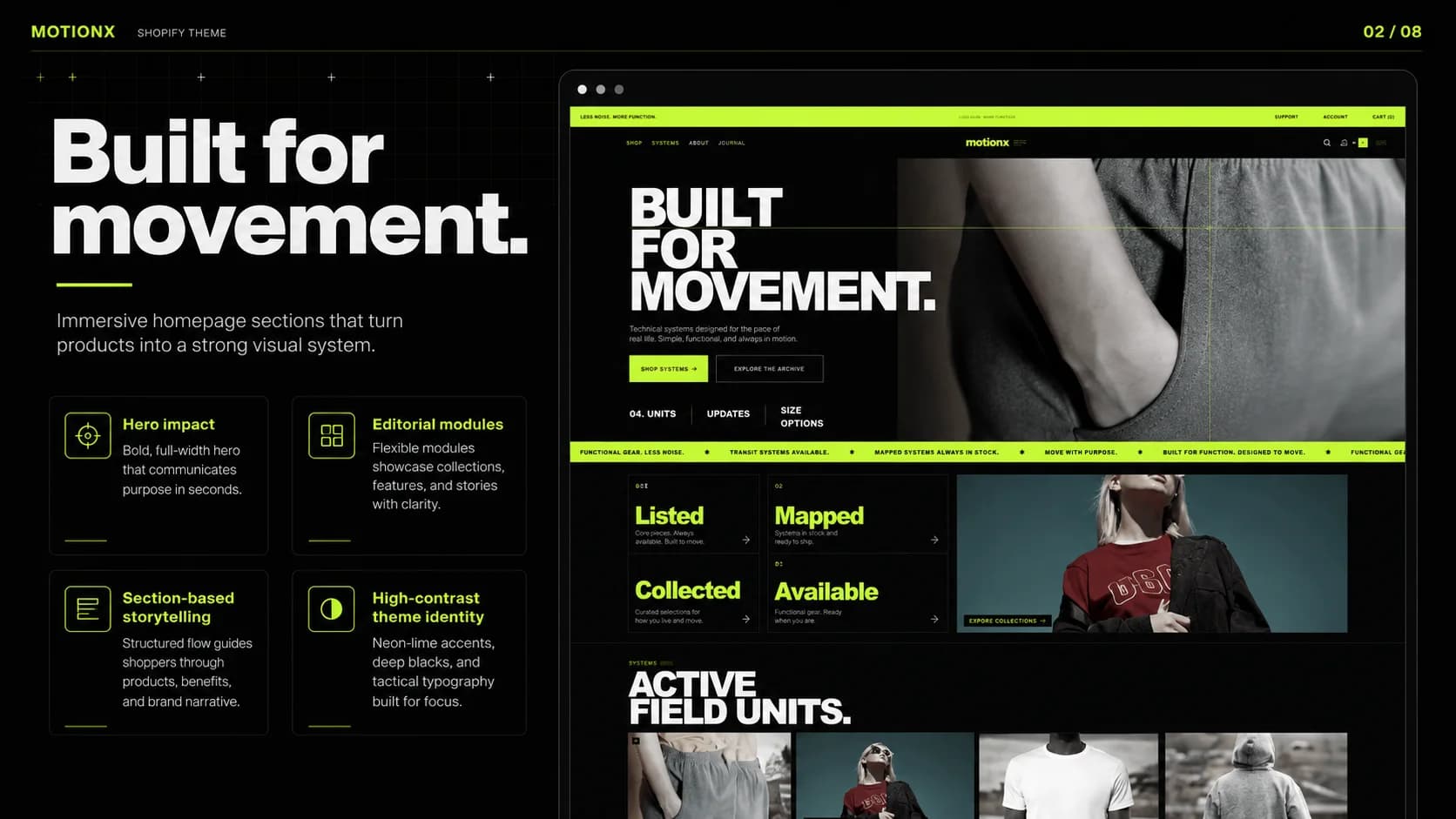
The streetwear brands that succeed on Shopify share one thing — they look like a real brand from the first visit.
Step 1 — Define Your Brand Identity Before You Touch Shopify
The biggest mistake new streetwear brands make is setting up their Shopify store before they have a clear brand identity. Your store is an expression of your brand — if you do not know what your brand stands for, your store will look like every other generic Shopify template.
Before you create your Shopify account, answer these questions clearly:
What is your aesthetic?
Streetwear covers a wide range of aesthetics — from Supreme's minimal box logo approach to Palace's chaotic graphics, from Corteiz's raw underground energy to Off-White's luxury-streetwear hybrid. Your aesthetic defines everything about your store — typography, colours, photography style, layout. Be specific. "Dark and edgy" is not an aesthetic. "Neobrutalist with a vibrant palette and raw borders" is an aesthetic.
Who is your customer?
The teenage hypebeast chasing Supreme drops has completely different purchase behaviour from the 25-year-old buying considered pieces from an independent label. Know which customer you are designing for. Their age, where they shop online, what other brands they wear, and how they discover new brands all affect how you should build and market your store.
What makes your brand different?
There are thousands of streetwear brands on Shopify. What is your specific angle? A graphic identity built around a single artist? A niche subcultural reference that a specific community will immediately recognise? A manufacturing story — made locally, sustainably, with specific materials? You need a clear answer to this before you spend a penny on products or marketing.
Step 2 — Set Up Your Shopify Store
Once you have clarity on your brand identity, setting up Shopify is straightforward.
Choose your Shopify plan
For a new streetwear brand, start on the Basic plan at $39/month. This gives you a full ecommerce store, unlimited products, 2 staff accounts, and all the core features you need to launch. You can upgrade to Shopify ($105/month) or Advanced ($399/month) as you grow — the upgrade path is seamless and you never lose your store data or setup.
Gymshark uses Shopify Plus as its commerce foundation, and Supreme is also reported on Shopify Plus. A new streetwear brand does not need an enterprise plan simply to launch; choose a plan around your actual operational requirements and verify current Shopify pricing for your market and billing term.
Configure your domain
Your domain is part of your brand identity. A .com domain that matches your brand name is the standard. Register it through Shopify directly (they offer domain registration) or through a registrar like Namecheap and connect it to your store. Avoid hyphens, numbers, or anything that makes the domain hard to say or type.
Set up payments
Shopify Payments is the simplest option — no third-party payment processor needed, lower transaction fees, and built-in fraud protection. Available in most countries. If Shopify Payments is not available in your country, Razorpay (India), Stripe, or PayPal are the standard alternatives.
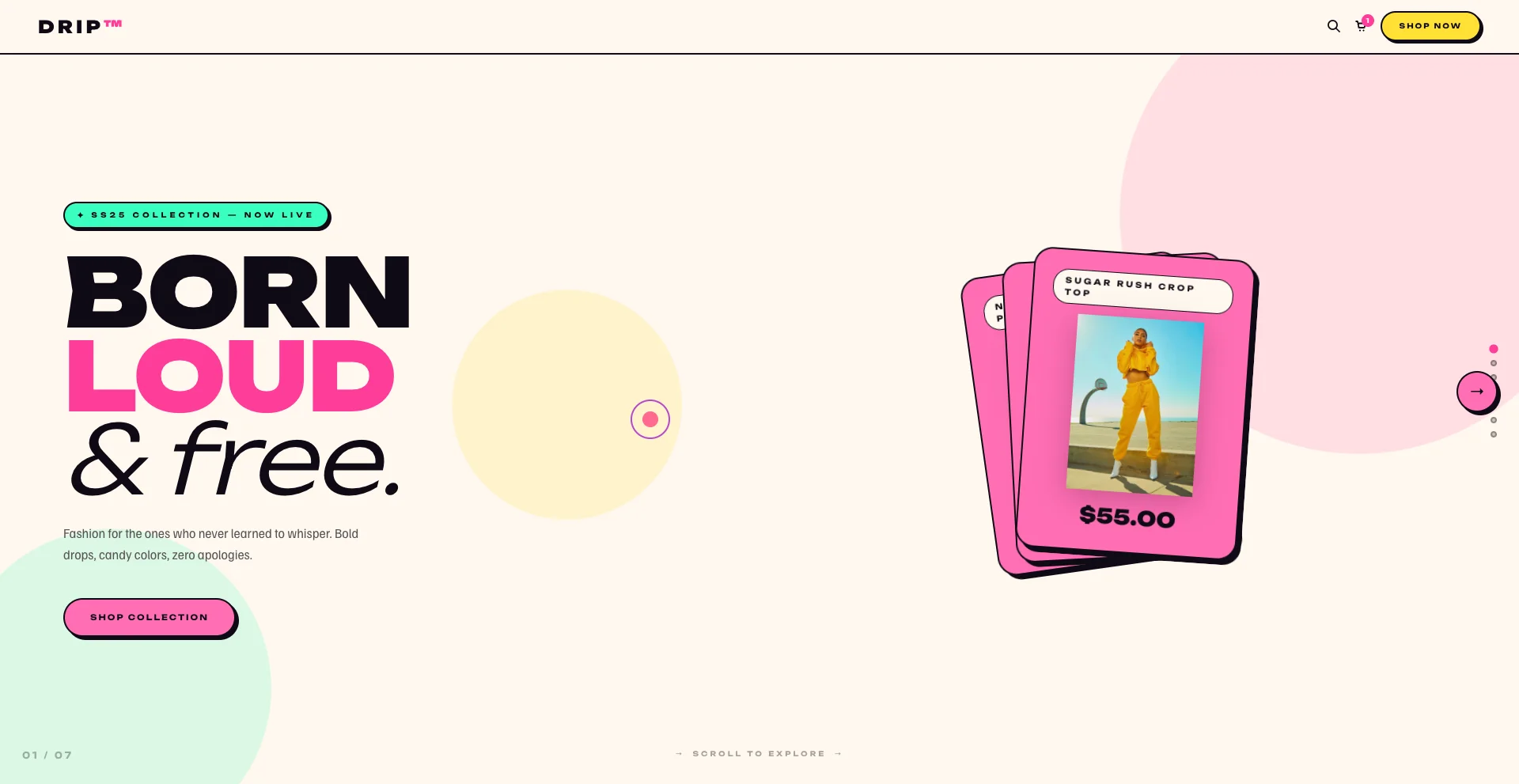
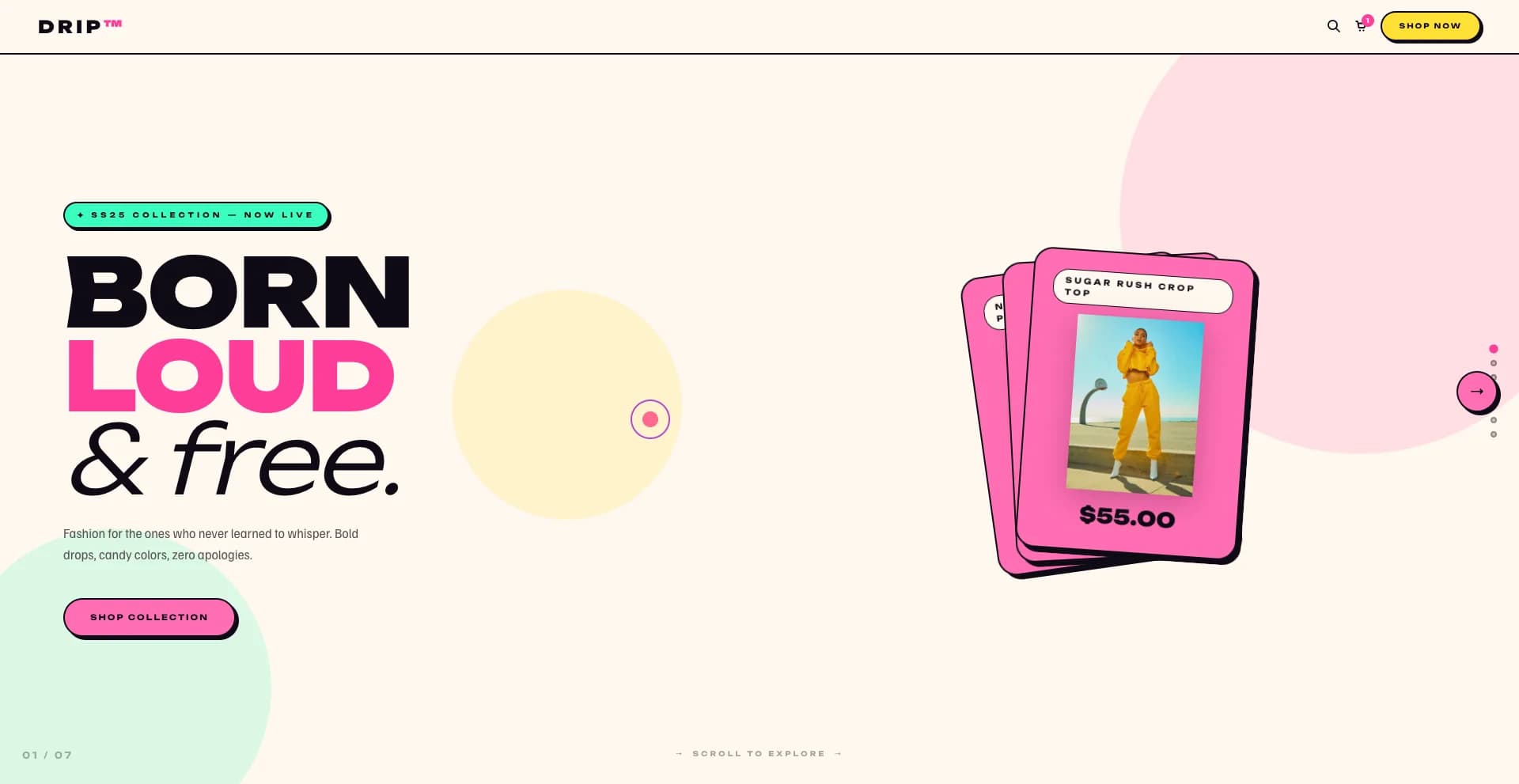
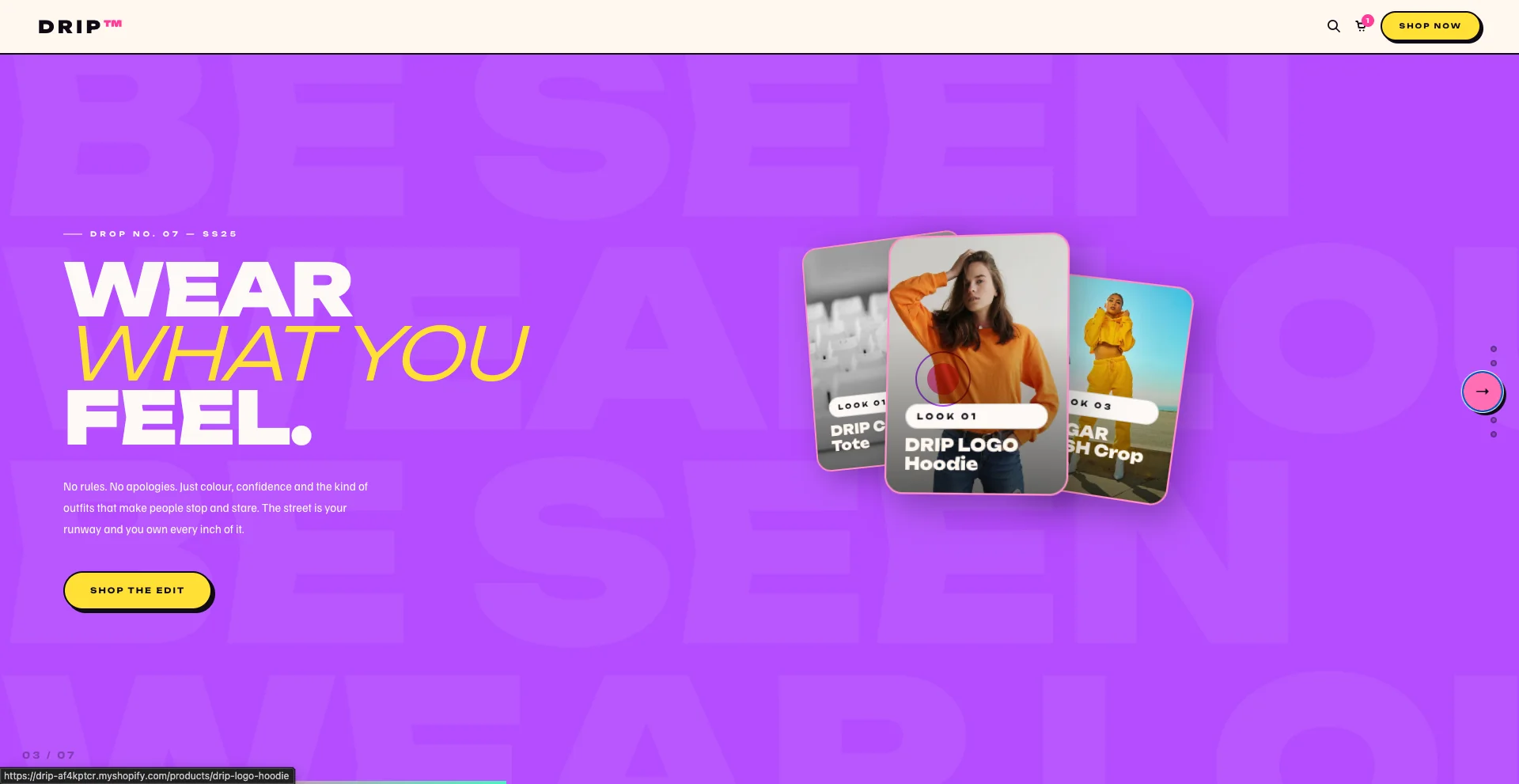
Drip — the neobrutalist Shopify theme built specifically for streetwear brands. Vibrant, bold, and impossible to mistake for a generic ecommerce store.
Step 3 — Choose a Theme That Matches Your Identity
This is the most important decision you make when setting up your streetwear Shopify store. Your theme determines how your brand looks and feels to every visitor. A generic theme makes a brand with genuinely great products look amateur. The right theme makes even a new brand look established and credible.
Most streetwear brands make one of two mistakes with themes:
Mistake 1: Using Dawn (the free default Shopify theme) — Dawn is clean and functional but it looks like a generic ecommerce starter kit. There is nothing wrong with it technically but it communicates nothing about your brand. Every visitor has seen it a hundred times before on every type of store. It does not say "streetwear brand" — it says "I just set up Shopify."
Mistake 2: Choosing Prestige without checking the visual fit — Prestige is a general premium theme currently listed at $400. Its editorial luxury direction can work for some fashion brands, but it may be more investment than a new streetwear label needs when the intended identity is graphic, neobrutalist or performance-led.
A theme built specifically for streetwear communicates the right things immediately — bold typography, high-energy layout, a visual identity that your target customer recognises as belonging to their cultural space.
Choose the direction before choosing the theme
Streetwear is not one visual language. Choose Lumina for colorful graphic and unisex apparel, Drip for vibrant neobrutalist presentation, or Striker when sports and performance are the primary identity. Compare the options in the streetwear Shopify theme guide and Streetwear Shopify Themes collection.
The theme built for streetwear brands
Drip — Neobrutalist Shopify Theme
Vibrant colours, raw borders, bold typography, 3D cards, wave transitions. Everything your streetwear store needs to look like a real brand from day one.
Shopify 2.0 · Unlimited use · One-time $99
Step 4 — Product Photography That Sells
In streetwear ecommerce, photography is not optional — it is the product. Your customer cannot touch the fabric, check the fit, or feel the weight of the piece. Every purchase decision is made entirely based on how the product looks in the image. Bad photography kills good products. Great photography sells average ones.
Shoot on model, not flat
Streetwear is about how clothing looks when worn. Flat lay photography — clothes laid out on a surface — works for some categories. For streetwear it kills the energy. Shoot every piece on a model or on yourself. Show the fit, the proportion, how the garment moves.
Match your photography style to your brand aesthetic
A neobrutalist brand with raw, bold graphics should have photography that matches — high contrast, deliberate, editorial. A luxury streetwear brand should have photography that communicates that premium positioning. Your photography and your theme design need to speak the same visual language.
Multiple angles are non-negotiable
Front, back, detail shots, and at least one lifestyle shot per product. Shopify's product page supports multiple images — use all of them. Customers who can see a product from multiple angles convert at significantly higher rates than customers who see one image.
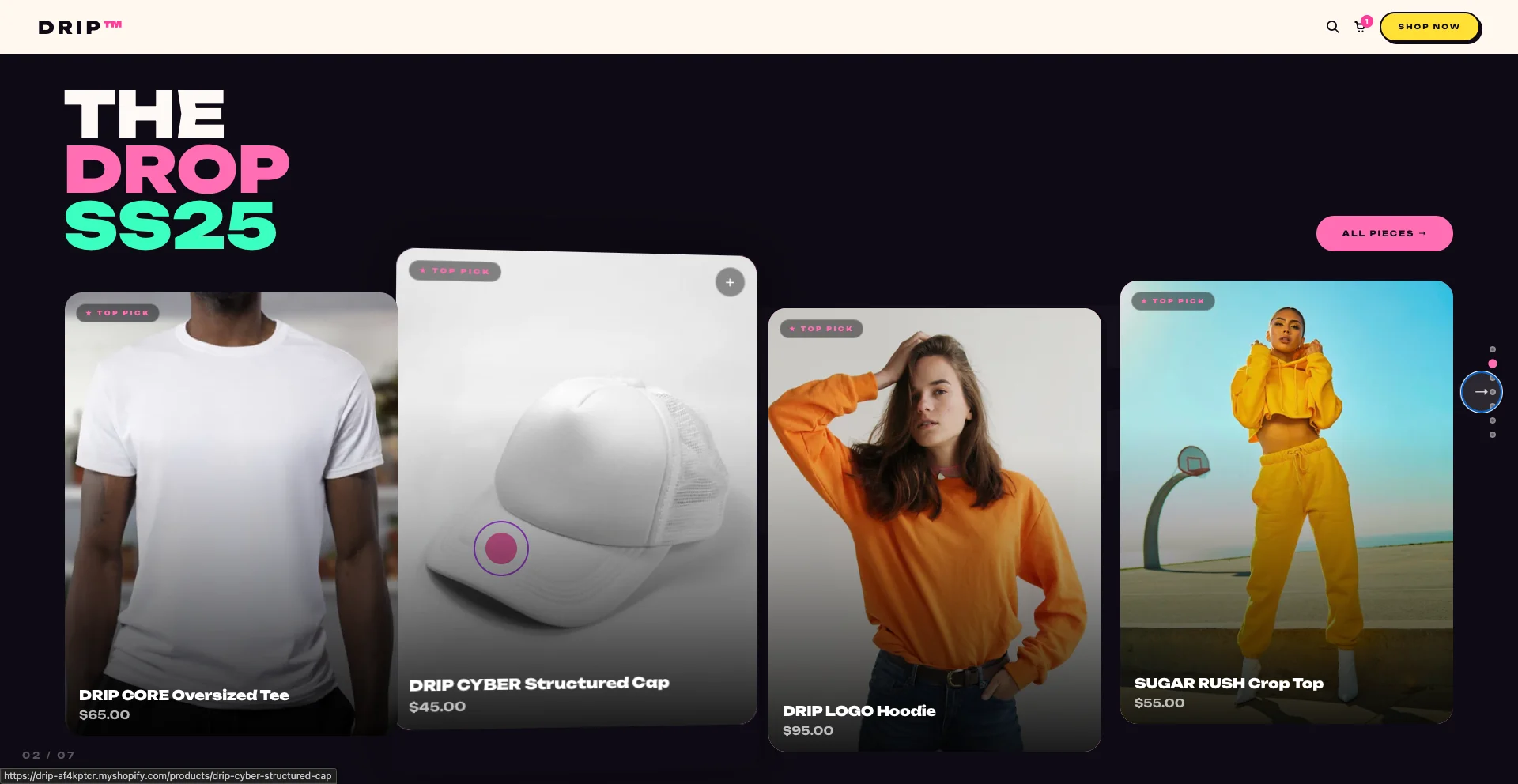
Drip's product pages are designed for the way streetwear buyers browse — bold, direct, product-forward.
Step 5 — Build Your Collection Structure
How you organise your products on Shopify affects both how customers navigate your store and how Google understands and indexes your content. A clean collection structure serves both purposes.
Start with broad categories
For most new streetwear brands, start with 3-5 collections maximum: Tops, Bottoms, Accessories, New Arrivals, and Sale. Do not over-complicate the navigation before you have the product range to justify it. A store with 20 products split across 15 collections looks sparse and confusing.
Use product tags strategically
Shopify's tag system lets you create dynamic collections that update automatically as you add products. Tag products with relevant attributes — season, colourway, collaboration — and create automated collections that pull tagged products. This saves significant manual work as your catalogue grows.
Step 6 — Essential Shopify Apps for Streetwear Brands
Shopify's core functionality covers the fundamentals. These apps add the specific features that streetwear brands need:
Reviews — Loox or Judge.me
Social proof is critical for a new brand with no established reputation. A review app that shows photo reviews from real customers builds trust with new visitors who have never heard of you. Loox (photo reviews) or Judge.me (free plan available) are the standard choices.
Email — Klaviyo
Email marketing drives more revenue per visitor than any other channel for ecommerce brands. Klaviyo integrates natively with Shopify, syncs your customer data automatically, and lets you send targeted emails based on purchase history and browsing behaviour. Start building your email list from day one — even before you have products to sell.
Upsell — ReConvert or Frequently Bought Together
Average order value is one of the most impactful levers for a new brand. An upsell app that shows related products at checkout or on the thank-you page can increase average order value by 15-25% with no additional traffic required.
Announcement bar — free in most themes
An announcement bar at the top of your store is essential for communicating drop dates, free shipping thresholds, and limited availability. Most good Shopify themes include this as a built-in section — no app required.
Step 7 — Marketing Your Streetwear Brand
The store is live. Now you need customers. Streetwear brand marketing in 2026 has a clear playbook:
Instagram and TikTok — organic first
Streetwear culture lives on social media. Document the brand building process — not just the finished products. Behind-the-scenes content, design process videos, packing orders, first samples arriving — this content builds community and drives organic discovery. Start building your audience before you have a store to sell from.
Seeding — get your product on the right people
Identify 10-20 people in your target community who have genuine influence — not necessarily large follower counts, but respected voices. Send them product. Real organic word of mouth from the right people is worth more than paid advertising for a new streetwear brand.
Limited drops — build scarcity from the start
Do not launch with unlimited inventory of every product. Release small quantities intentionally. Selling out builds the perception of demand even when you are small. "Sold Out" on a new brand's product page communicates more credibility than 100 units sitting unsold.
SEO — long term traffic
Blogs about your niche, useful product and collection content, and a properly structured store can contribute to organic search visibility over time. SEO results are not guaranteed on a fixed timeline. For platform examples, see our breakdowns of Supreme's Shopify setup and Gymshark's Shopify-to-Magento-to-Shopify Plus and headless architecture journey.
The theme built for streetwear brands
Drip — Neobrutalist Shopify Theme
Vibrant colours, raw borders, bold typography, 3D cards, wave transitions. Everything your streetwear store needs to look like a real brand from day one.
Shopify 2.0 · Unlimited use · One-time $99
Frequently Asked Questions
The minimum viable setup: Shopify Basic at $39/month, a domain at $14/year, and a theme at $99 one-time. That is roughly $150 to get a professional store live. Product costs are separate — a minimum order of 12-24 pieces per design from a local manufacturer typically runs $300-$800 depending on garment type and location. A realistic launch budget including product, photography, and store setup is $1,000-$3,000.
You can start selling on Shopify without a formal business registration in most countries. As your revenue grows you will want to formalise — a sole trader or LLC registration, a business bank account, and proper accounting. But nothing stops you from launching and making your first sales before the legal structure is sorted.
Drip by Ogresto is the only Shopify theme built specifically for streetwear brands. Neobrutalist design system, vibrant colour palette, bold display typography, 3D card effects, and horizontal scrolling sections — purpose-built for the streetwear aesthetic at $99 one-time. For brands with a more athletic crossover, Striker is the sports-streetwear alternative.
Shopify's native variant system handles sizing cleanly — create a Size variant with your available sizes and Shopify manages inventory per size automatically. Add a size guide as a popup or page — most good themes include a size guide feature. Accurate sizing information reduces returns significantly.
Yes. Shopify handles limited inventory natively — set your stock quantity and products show as sold out automatically when inventory reaches zero. For scheduled drops at a specific time, the Launchpad app (free on Shopify Plus) or third-party apps like Mechanic handle timed product launches. You can also simply publish products manually at your drop time — what most small brands do when starting out.
With a purpose-built theme, a clear brand identity, and product photography ready, you can have a professional streetwear store live in 2-4 days. The bottleneck is almost never the store setup — it is having the photography and product copy ready to go. Plan your photography shoot before you start the store build.
Discussion
Join the conversation